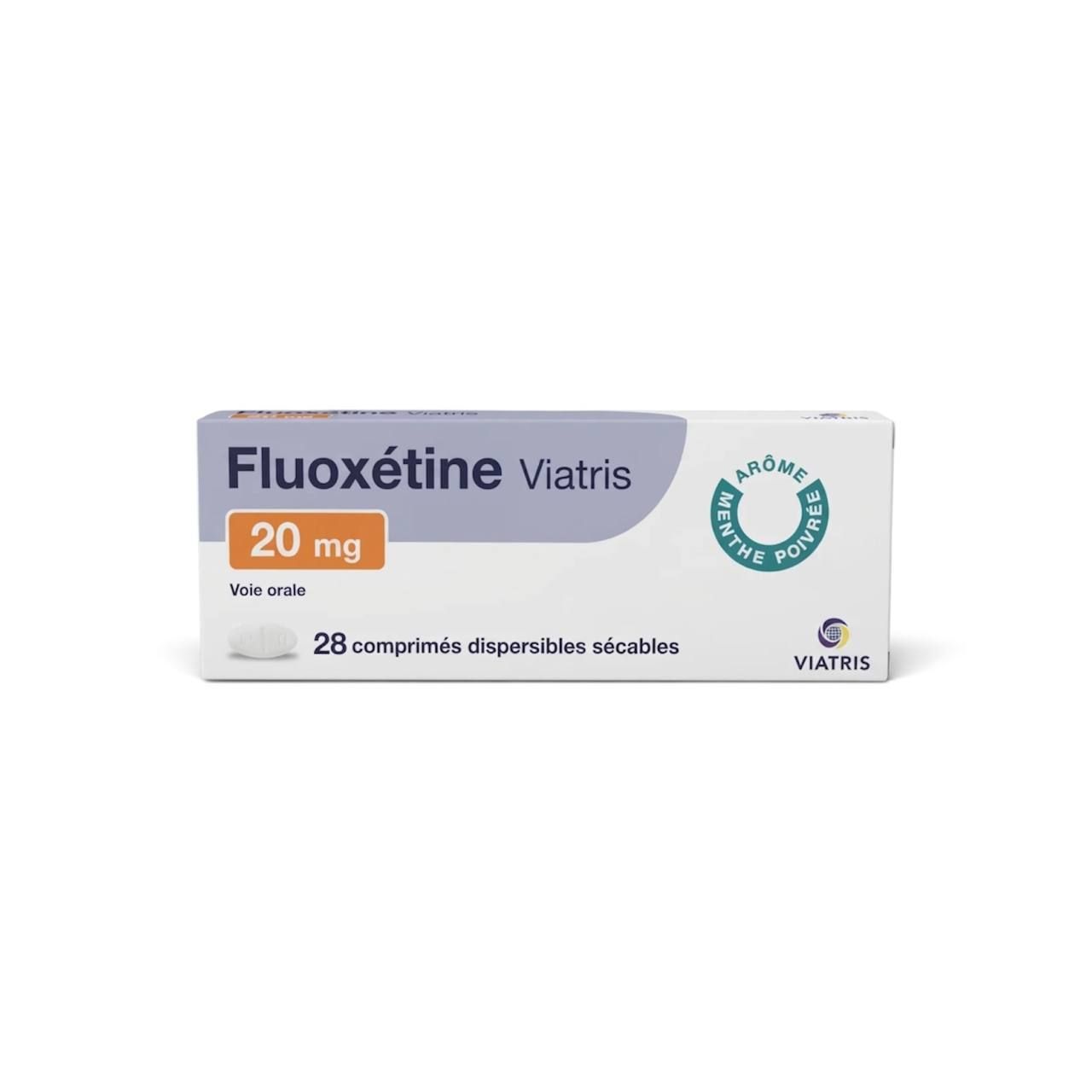
Fluoxetine 20 mg
46,00 €
Antidepressant
In stock
Save this product for later
Customer reviews
Reviews only from verified customers
No reviews yet. You can buy this product and be the first to leave a review.
Fluoxetine 20 mg
Product Details
Fluoxetine Viatris 20 mg, 28 Dispersible Scored Tablets (Peppermint Flavor)
Fluoxetine is one of the most studied and most prescribed SSRIs in the world — the molecule that opened the modern era of antidepressant therapy. This Viatris formulation has two practical distinctions: the tablets are dispersible and scored (dissolve in water, split for titration) and peppermint-flavored — the taste of the classic fluoxetine suspension, kept in a tablet form.
Why this formulation matters
- Dispersible — dissolves in a little water for patients who have trouble swallowing tablets;
- Scored — splits cleanly into halves: 20 mg → 10 mg, the practical titration step physicians use;
- Peppermint flavor — masks the characteristic bitterness of fluoxetine, which is otherwise hard to tolerate;
- Half-life advantage — fluoxetine's long half-life (its metabolite norfluoxetine lasts 1–2 weeks) means missing a dose is far less consequential than with shorter-acting SSRIs, and discontinuation symptoms are milder — the most forgiving SSRI for irregular takers.
What it is used for
Fluoxetine is a prescription-only antidepressant (SSRI class), used per physician for:
- depressive episodes and recurrent depression;
- obsessive-compulsive disorder (OCD);
- bulimia nervosa;
- panic disorder (with or without agoraphobia);
- premenstrual dysphoric disorder (PMDD).
Prescription only. Starting, changing or stopping antidepressant therapy is always a physician decision with scheduled follow-ups.
Composition and form
- Active ingredient: fluoxetine 20 mg per dispersible tablet;
- Form: 28 dispersible, scored film-coated tablets, oral route, peppermint flavor;
- Manufacturer: Viatris (France).
How it is used
- Standard adult start for depression: 20 mg once daily (morning, with or without food);
- Dissolve in a small amount of water or swallow whole — both work;
- Split along the score for physician-directed titration (10 mg steps);
- Antidepressant effect builds over 2–4 weeks — do not stop early because "nothing is happening";
- Course duration per physician — typically continued for 6+ months after improvement to prevent relapse;
- Never stop abruptly without discussing with your physician.
Safety information
- Early-phase activation: in the first weeks, some patients feel restlessness or agitation before the benefit appears — the physician schedule covers this;
- Age restrictions: fluoxetine is the only SSRI formally approved for pediatric depression (8+), but young patients require close physician monitoring in early weeks;
- Mania switch risk: in undiagnosed bipolar disorder an antidepressant can trigger a manic episode — a proper psychiatric evaluation before starting matters;
- Serotonin syndrome (with other serotonergic drugs: triptans, tramadol, MAO inhibitors, St. John's Wort) — never combine without physician approval;
- Bleeding risk with NSAIDs/anticoagulants is mildly elevated — disclose all medicines;
- Pregnancy and breastfeeding — physician decision only (fluoxetine is among the better-studied SSRIs in pregnancy, but the decision is individual);
- Driving caution until individual response is clear.
FAQ — Frequently Asked Questions
Why dispersible tablets and peppermint flavor?
Practical reasons: fluoxetine is famously bitter — the peppermint flavor masks it, making daily intake far more tolerable. The dispersible form dissolves in water for those who struggle with swallowing, and the score line allows 10 mg half-steps for titration. This Viatris formulation keeps the taste of the classic fluoxetine solution in a convenient tablet — genuinely one of the more comfortable SSRI formulations to take.
How is fluoxetine different from other SSRIs (escitalopram, sertraline)?
All are first-line SSRIs with the same core mechanism. The differences are in the details: fluoxetine's long half-life makes missed doses forgiving and discontinuation milder; escitalopram has fewer interactions; sertraline has a slight edge in anxiety indications per some guidelines. Fluoxetine is also the SSRI with pediatric approval (8+) and the bulimia indication. Your physician chooses based on your specific condition, other medicines and prior response.
How long before I feel the effect?
2–4 weeks for the main effect, sometimes longer for full benefit. The first days may bring restlessness or sleep changes — this is the early-phase adjustment, not failure. Do not stop in week two because "nothing is happening": that is the most common self-inflicted error in antidepressant therapy. Your physician schedules the check-in that covers this phase.
Is it true it is approved for teenagers?
Yes — fluoxetine is the only SSRI with formal approval for pediatric depression (from age 8), supported by specific pediatric trials. This does not mean self-prescribing for a teenager: pediatric antidepressant therapy requires close physician supervision, especially in the first weeks, and a proper psychiatric evaluation first. For adults, the pediatric data simply add to the evidence base.
What if I miss a dose?
With fluoxetine this matters least among SSRIs: its long half-life (norfluoxetine, the active metabolite, persists 1–2 weeks) means blood levels barely move from one missed tablet. Take the next dose as scheduled, do not double. This forgiveness is a genuine practical advantage for people whose routines are unstable — but it is not an invitation to take it irregularly on purpose.
Ask a question or inquire about delivery to your country
⚠️ Delivery only to EU countries and the United Kingdom!
You May Also Like
Display prices in:EUR

