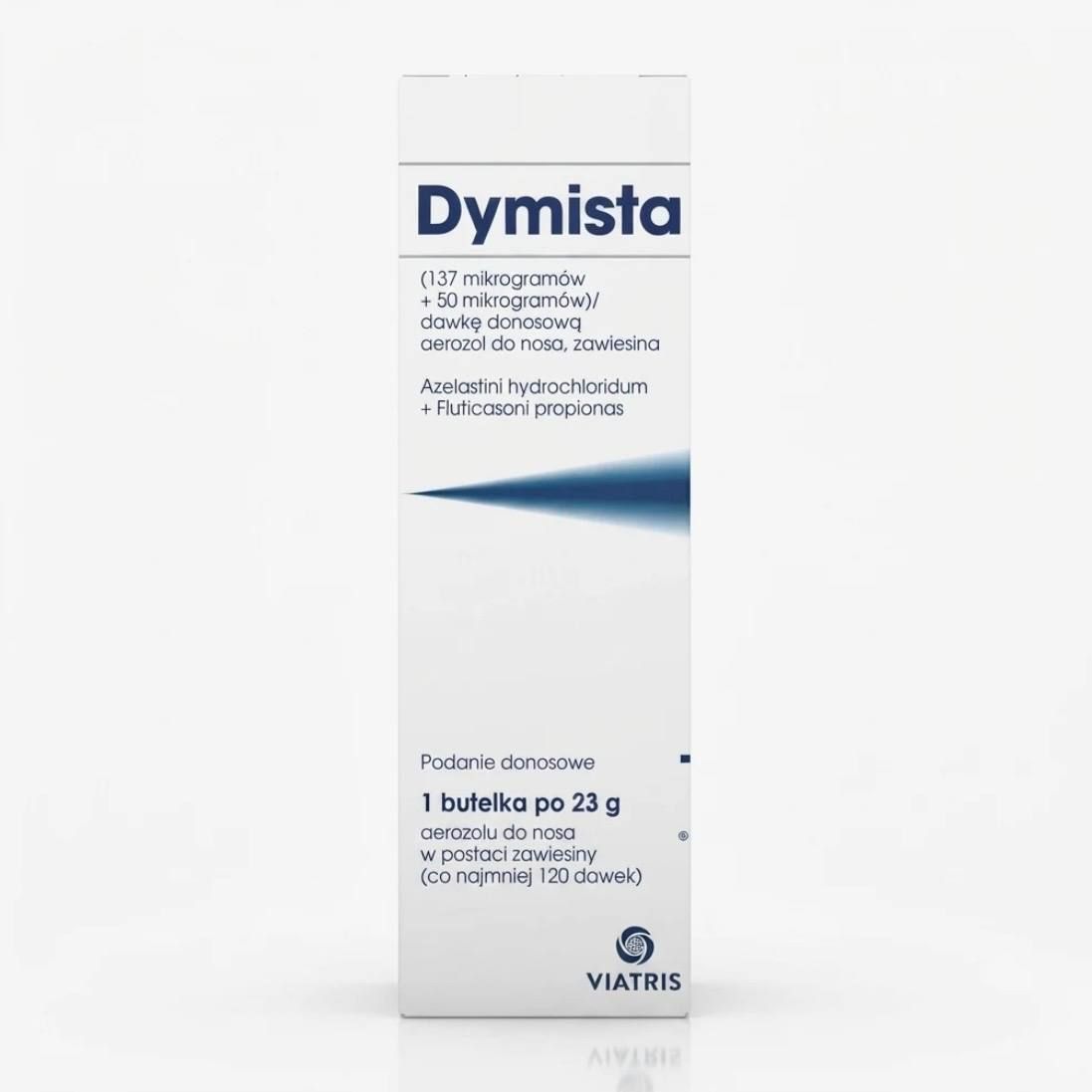
Dymista (Azelastine + Fluticasone) Nasal Spray
49,00 €
Allergic rhinitis
In stock
Save this product for later
Customer reviews
Reviews only from verified customers
No reviews yet. You can buy this product and be the first to leave a review.
Dymista (Azelastine + Fluticasone) Nasal Spray
Product Details
Dymista (Azelastine + Fluticasone) Nasal Spray 137/50 µg — 120 Doses, Viatris
Dymista is the combination nasal spray with azelastine hydrochloride (antihistamine) and fluticasone propionate (corticosteroid) in one bottle — the modern standard for moderate-to-severe allergic rhinitis. Instead of choosing between an antihistamine spray and a steroid spray, you get both mechanisms simultaneously: azelastine relieves sneezing, itching and runny nose within minutes, while fluticasone builds up anti-inflammatory control over the days that follow. In European guidelines this combination outperforms either component used alone in moderate and severe seasonal and perennial rhinitis.
Why two mechanisms in one spray beat each alone
- Azelastine — local H1-blockade: fast relief of sneezing, nasal itching and rhinorrhea (works within 10–15 minutes);
- Fluticasone — topical steroid: builds anti-inflammatory control, targets congestion and blockage over days;
- Together — clinical trials show superior symptom control vs either monotherapy in moderate/severe rhinitis, particularly for nasal congestion, which pure antihistamines handle weakly;
- One device, one routine — instead of coordinating two separate sprays.
What it is used for
Dymista is a prescription nasal spray used (per physician guidance) for:
- moderate-to-severe seasonal allergic rhinitis (pollen allergy);
- perennial allergic rhinitis (dust mites, animal dander, molds);
- cases where oral antihistamines or single-component nasal sprays provide insufficient control.
Composition and form
- Active ingredients: azelastine hydrochloride 137 µg + fluticasone propionate 50 µg per spray;
- Form: nasal spray suspension, one bottle 23 g — at least 120 metered doses;
- Manufacturer: Viatris (Europe).
How it is used
- Standard adult dose: 1 spray into each nostril twice daily (morning and evening);
- Prime the pump before first use (spray until a fine mist appears);
- Shake gently before each use; do not blow your nose immediately after spraying;
- Azelastine's taste (slight bitterness) is known and diminishes with use;
- Course duration per physician — during pollen season, continuous use is typical.
Safety information
- Common side effects: bitter taste, mild nasal irritation, occasional nosebleed (as with any intranasal steroid);
- Direct the spray slightly outward (away from the septum) to reduce irritation risk;
- Unlike oral antihistamines, causes minimal drowsiness — but individual sensitivity varies;
- Use during pregnancy only on explicit physician decision;
- Not for children under the approved age without specialist guidance.
FAQ — Frequently Asked Questions
Why use Dymista instead of an oral antihistamine tablet?
Oral antihistamines help sneezing and itching but poorly relieve nasal congestion, and they work systemically. Dymista delivers both an antihistamine and a steroid directly to the inflamed nasal mucosa — congestion control is significantly better, with minimal systemic exposure. For moderate-to-severe rhinitis, guidelines position intranasal combination therapy above oral antihistamines.
How fast does it work?
The azelastine component starts relieving sneezing and itching within 10–15 minutes of the first dose. The fluticasone component builds anti-inflammatory control over several days of regular use — full benefit typically at 3–7 days. This dual timing is exactly the design intent: fast rescue plus durable control.
Does it cause drowsiness like oral antihistamines?
Minimal — azelastine works locally in the nose with low systemic absorption, unlike first-generation tablets. Some users report slight drowsiness in the first days; if that occurs, evening dosing helps. Do not combine with alcohol or sedatives without physician guidance.
Can I use it all pollen season?
Yes — continuous use throughout the season is the standard pattern for moderate-severe rhinitis, and months-long use of intranasal steroids at this dose is well studied. Long-term supervision by your physician remains reasonable practice, especially for teens.
Can I combine Dymista with oral antihistamine tablets?
Usually unnecessary — the spray already contains an antihistamine component. Combining adds little benefit while increasing systemic exposure. If symptoms break through, discuss dose adjustment or an eye-drop antihistamine with your physician rather than self-adding tablets.
Ask a question or inquire about delivery to your country
You May Also Like

Display prices in:EUR

