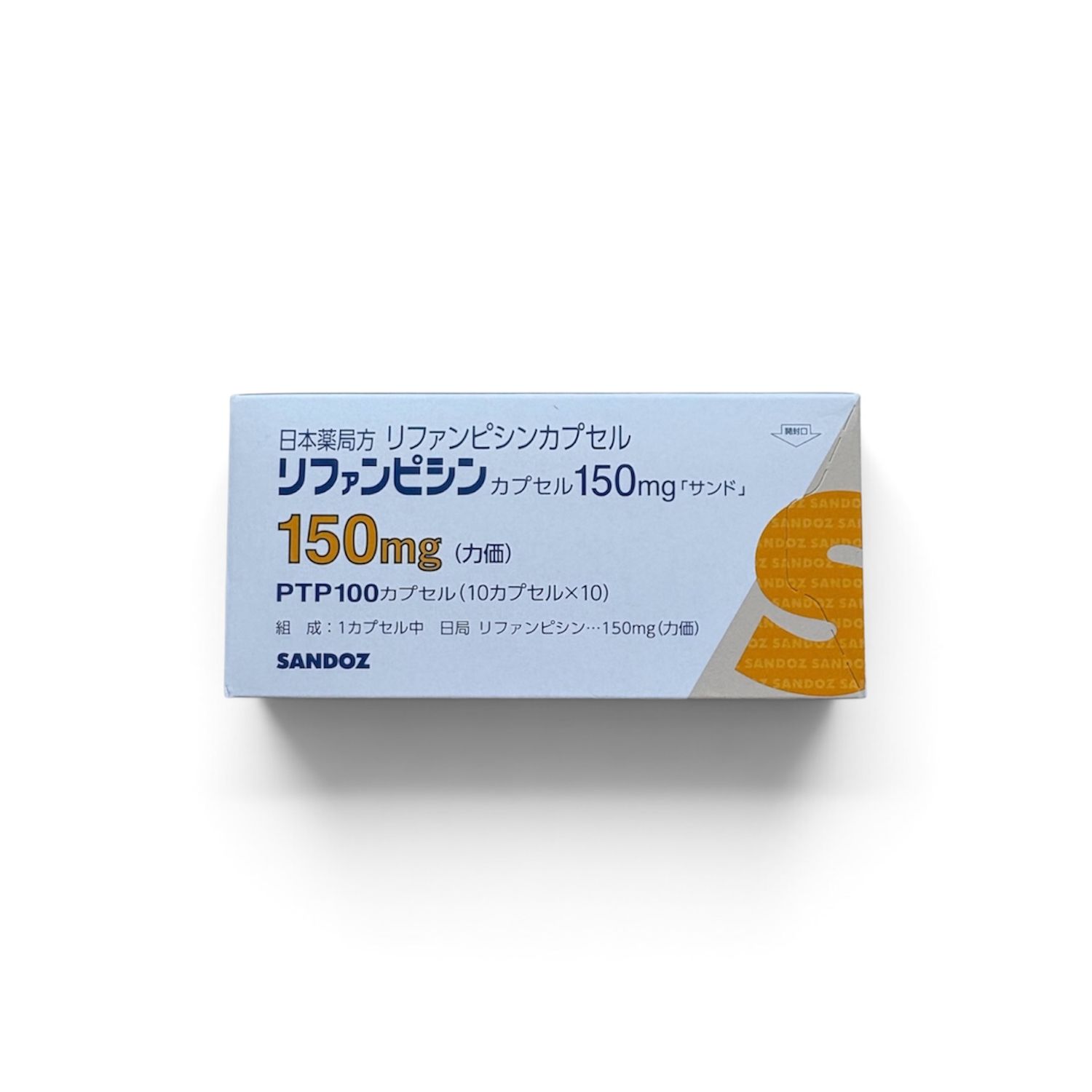
Rifampicin 150 mg Sandoz
41,00 €
Antibiotic
In stock
Customer reviews
Reviews only from verified customers
No reviews yet. You can buy this product and be the first to leave a review.
Rifampicin 150 mg Sandoz
Product Details
Rifampicin Sandoz Capsules 150 mg
Rifampicin Sandoz 150 mg — Antibacterial Therapy for Tuberculosis and Susceptible Infections
Rifampicin Sando Capsules 150 mg (リファンピシンカプセル150mg「サンド」) are a Japanese prescription antibacterial medicine produced by Sandoz. Each capsule contains 150 mg of rifampicin, an antibiotic of the rifamycin class that meets the standards of the Japanese Pharmacopoeia. The pack contains 100 capsules in PTP blister sheets (10 capsules × 10 sheets).
Rifampicin is one of the cornerstone medicines of modern tuberculosis therapy. It is used strictly under medical supervision, almost always in combination with other antibacterial medicines, and treatment is planned and monitored by the treating physician.
Active Ingredient
Each capsule contains:
- Rifampicin — 150 mg per capsule
Pharmaceutical form:
- Hard capsules for oral administration
Packaging:
- PTP packaging, 100 capsules (10 capsules × 10 sheets)
Manufacturer: Sandoz. Country of origin: Japan.
What Is Rifampicin?
Rifampicin belongs to the rifamycin class of antibacterial agents. It is a semisynthetic antibiotic that is active against Mycobacterium tuberculosis and a number of other bacteria. In Japan, rifampicin capsules are a standard prescription medicine used in treatment protocols drawn up by a physician.
A key principle of rifampicin therapy: it is never used as a single medicine for active tuberculosis. Combination therapy with several antibacterial drugs is required to achieve the treatment goal and to prevent the development of bacterial resistance.
Common Uses of Rifampicin Sandoz 150 mg
Tuberculosis Treatment
Rifampicin is a first-line medicine used in combination regimens for the treatment of pulmonary and extrapulmonary tuberculosis, together with other anti-tuberculosis medicines as prescribed (for example isoniazid, pyrazinamide and ethambutol, according to the physician's protocol).
Latent Tuberculosis Infection
In latent tuberculosis infection, rifampicin may be prescribed by a physician, alone in specific regimens or in combination, depending on the patient's condition and medical guidelines.
Other Susceptible Infections
Rifampicin is also used in physician-supervised combination regimens for certain other infections caused by rifampicin-susceptible organisms, such as leprosy and some serious staphylococcal infections. The decision is always made by the treating doctor.
How Rifampicin Works
Rifampicin inhibits bacterial DNA-dependent RNA polymerase, blocking the synthesis of RNA in susceptible bacteria. This leads to the death of sensitive organisms. Because resistance can develop quickly when rifampicin is used alone, it is always combined with other antibacterial medicines in the regimens mentioned above.
Potential Benefits
- Active ingredient meeting the Japanese Pharmacopoeia standard
- Manufactured by Sandoz, an international pharmaceutical company
- Convenient PTP blister packaging of 100 capsules
- Once-daily dosing as determined by the physician
- First-line role in tuberculosis therapy protocols worldwide
How to Take Rifampicin Sandoz
- The dose and duration of treatment are determined by the physician, taking into account body weight and the disease being treated.
- Capsules are typically taken once daily on an empty stomach (30–60 minutes before a meal), because food reduces the absorption of rifampicin.
- Take the capsules at the same time every day.
- Do not change the dose and do not interrupt or stop the course without consulting your doctor — treatment adherence is critical for success.
- If a dose is missed, follow the instructions of your physician.
Rifampicin and Drug Interactions
Rifampicin is a strong inducer of liver enzymes and can reduce the effect of many medicines. Tell your doctor about every medicine you take. Important known interactions include:
- Oral contraceptives — reliability may be reduced; ask your doctor about additional contraception methods
- Anticoagulants (for example warfarin) — blood clotting parameters require monitoring
- Antidiabetic medicines — blood glucose control may change
- Corticosteroids, anticonvulsants, some cardiac and antiretroviral medicines
This list is not complete. Only the treating physician can assess interactions for your specific situation.
Possible Side Effects
Rifampicin may colour urine, tears, sweat and other body fluids orange-red; this effect is harmless and expected. Other possible effects include:
- Nausea, loss of appetite, abdominal discomfort
- Elevated liver enzymes; liver function is usually monitored during long courses
- Headache, dizziness
- Rarely — allergic reactions, skin rash
- Flu-like symptoms, mainly when the medicine is taken intermittently
Contact your doctor promptly if you notice severe skin reactions, persistent nausea with vomiting, yellowing of the skin or eyes (jaundice), dark urine, fever or other unusual symptoms.
Contraindications
- Hypersensitivity to rifampicin or any component of the capsules
- Jaundice and significant liver disease (use is decided by the physician)
- Caution with regular alcohol use — inform your doctor
- Pregnancy and breastfeeding — the medicine is used only if clearly necessary and prescribed by a physician
Storage and Packaging
- 150 mg capsules, 100 capsules per box (PTP, 10 × 10)
- Store at room temperature, protected from moisture and direct sunlight
- Keep out of reach of children; keep capsules in the original packaging until use
FAQ
What is Rifampicin Sandoz used for?
Rifampicin is used in physician-prescribed treatment regimens for tuberculosis and for certain other infections caused by susceptible bacteria, always as determined by the treating doctor.
Why is rifampicin combined with other medicines?
Combination therapy is required for tuberculosis treatment: it increases the effectiveness of the course and prevents the bacteria from developing resistance to the medicine.
Why did my urine turn orange?
Rifampicin colours urine, tears and sweat orange-red. This is a known, harmless effect of the medicine and is not a reason to stop treatment.
Can I take it with food?
Capsules are usually taken on an empty stomach, because food significantly reduces the absorption of rifampicin. Follow the schedule given by your physician.
Does rifampicin affect birth control pills?
Yes, rifampicin can reduce the reliability of oral contraceptives. Ask your doctor about additional contraception methods during the course.
How long is the treatment?
The duration depends on the disease and the protocol prescribed by the physician. Tuberculosis courses usually last several months and must not be interrupted without medical supervision.
Ask a question or inquire about delivery to your country
You May Also Like
Display prices in:EUR

